// Materials guide
What’s safe to laser — and what never is
Lasers cut and engrave a long list of natural materials, but some plastics release corrosive or toxic gases when burnt. Here’s what each type of machine can do with each material, what to avoid completely, and the filaments and resins 3D printers use.
// For lasers
Laser cutting & engraving materials
“Diode” means blue-light (around 455nm) diode lasers; “CO2” means 10.6µm CO2 tube lasers; “fibre” means 1064nm infrared/fibre lasers.
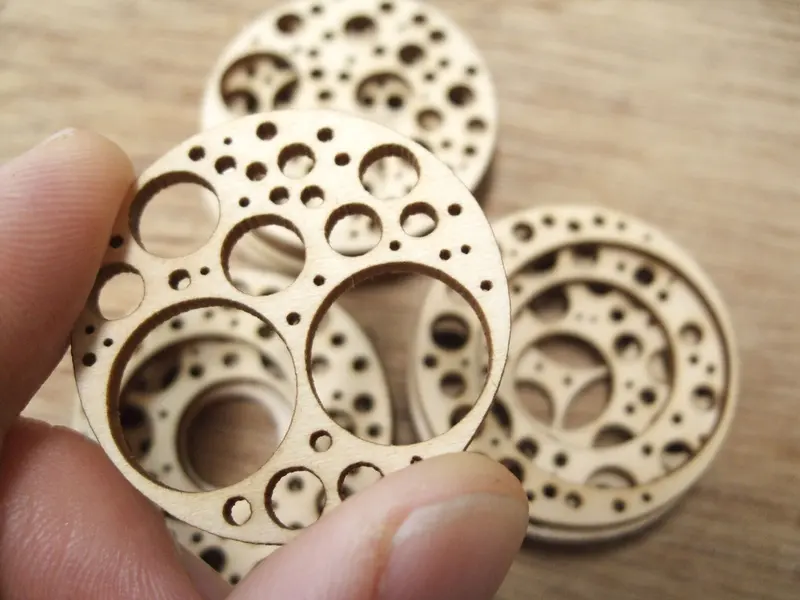
-
Plywood (including birch ply)
Laser-friendlyCO2: cut and engrave. Diode: cuts thinner sheets; engraves well.
The workhorse of laser crafting: flat, stable and easy to cut into boxes, signs and models. Buy plywood sold as laser-grade — Glowforge notes that some plywood glues, weatherproofing treatments and finishes are not laser-compatible.
- Masking tape or the sheet’s own film reduces smoke staining on the surface.
- Cut edges come out dark brown; that is normal.
- Run a test grid — glue layers vary between suppliers.
Sources: Glowforge — Custom (Non-Proofgrade) Materials FAQ · xTool — Safety Guide for xTool D1 Laser Cutting & Engraving · University of the Arts London, Creative Computing Institute — Laser Safe Materials
-
Solid wood
Laser-friendlyCO2: cut and engrave. Diode: engraves well; cuts thinner pieces.
Hardwoods and softwoods engrave beautifully and cut where thickness allows. Avoid oily or resinous woods, which xTool flags as a fire risk, and remember stains and finishes can give off harmful fumes.
- Engrave across the grain for even tone on stripy woods.
- Some species’ smoke or dust is irritating — keep extraction running.
Sources: xTool — Safety Guide for xTool D1 Laser Cutting & Engraving · Glowforge — Safety: Glowforge Performance Series · Epilog Laser — Laserable material compatibility
-
Cast acrylic
Laser-friendlyCO2: cut and engrave. Diode: only dark, opaque colours — not clear, white or blue.
Cast acrylic (PMMA, sometimes sold as “GS”) is the usual choice for engraving: a CO2 laser leaves a frosted white mark. xTool notes acrylic is very flammable during vector cutting, so watch every job.
- Leave the protective film on while cutting.
- Clear and coloured cast acrylic both engrave with CO2.
- Check it really is acrylic — polycarbonate looks similar and must not be lasered.
Sources: Trotec — Acrylic laser cutting and engraving (UK) · xTool — Essentials When Processing Acrylic with xTool Laser Machine · xTool — xTool F1 Ultra Safety First
-
Extruded acrylic
Laser-friendlyCO2: cuts with a flame-polished edge. Diode: same colour limits as cast acrylic.
Extruded acrylic (“XT”) is the better choice when the cut edge matters: Trotec and xTool both say it cuts cleanly with a polished edge on a CO2 laser, while cast acrylic engraves better.
- Diode lasers can’t cut clear, white or blue acrylic — the light passes through or reflects.
- Use dark, non-transparent sheet if you only have a diode laser.
Extruded acrylic on Amazon.co.uk
Sources: Trotec — Laser cutting acrylic: flame-polished edges · xTool — Essentials When Processing Acrylic with xTool Laser Machine · xTool — Safety Guide for xTool D1 Laser Cutting & Engraving
-
Paper and card
Laser-friendlyCO2 and diode: cut and engrave.
Lasers cut intricate card and paper patterns, but paper catches fire very easily. Glowforge warns about inks, coatings and staples; UAL’s lab cuts one sheet at a time.
- Hold sheets flat with pins or a honeycomb bed — curling paper can flare.
- Never stack sheets.
Paper and card on Amazon.co.uk
Sources: Glowforge — Safety: Glowforge Performance Series · Glowforge — Custom (Non-Proofgrade) Materials FAQ · University of the Arts London, Creative Computing Institute — Laser Safe Materials
-
Vegetable-tanned leather
Laser-friendlyCO2: cut and engrave. Diode: cuts thin leather; engraves well.
Veg-tan leather is processed with plant tannins and engraves to a rich brown. Avoid chrome-tanned leather (see below). Glowforge notes some leather dyes can still give off toxic fumes.
- Ask the supplier how the leather was tanned before you buy for lasering.
Vegetable-tanned leather on Amazon.co.uk
Sources: Glowforge — Custom (Non-Proofgrade) Materials FAQ · Epilog Laser — Laserable material compatibility · xTool — Safety Guide for xTool D1 Laser Cutting & Engraving
-
Cork
Laser-friendlyCO2: cut and engrave. Diode: cuts well.
Cork sheet is ideal for coasters, mats and noticeboard shapes. xTool advises avoiding very thick or heavily glued cork.
- Thin cork sheets cut quickly — watch for flaming at slow speeds.
Sources: xTool — Safety Guide for xTool D1 Laser Cutting & Engraving · Epilog Laser — Laserable material compatibility
-
Anodised aluminium
Laser-friendlyCO2 and diode: mark the surface (removes or discolours the anodised layer). Not cut.
Business cards, tags and phone stands in anodised aluminium take a crisp white or grey mark. The laser changes the coloured surface only — desktop diode and CO2 machines don’t cut the metal.
- Clean off fingerprints before marking for an even result.
Anodised aluminium on Amazon.co.uk
Sources: Glowforge — Custom (Non-Proofgrade) Materials FAQ · xTool — Safety Guide for xTool D1 Laser Cutting & Engraving · Epilog Laser — Laserable material compatibility
-
Slate, stone and marble
Laser-friendlyCO2 and diode: engrave only.
Natural slate engraves to a pale grey mark, which makes it popular for coasters, signs and house numbers. Stone can be engraved but not cut. Engraving makes smoke and fine dust, so keep extraction on.
- Slate blanks are often slightly bowed — check they sit flat and in focus.
Slate, stone and marble on Amazon.co.uk
Sources: Glowforge — Custom (Non-Proofgrade) Materials FAQ · xTool — Safety Guide for xTool D1 Laser Cutting & Engraving · Epilog Laser — Laserable material compatibility
-
Glass
Laser-friendlyCO2: engraves. Diode: can’t engrave clear glass directly — cover it first.
CO2 lasers frost the surface of glass for engraved glasses and panels; glass can’t be cut. xTool says a diode laser can’t engrave transparent glass directly and suggests covering it with coloured paper first.
- A rotary attachment lets you engrave all the way round a glass or bottle.
Sources: Glowforge — Custom (Non-Proofgrade) Materials FAQ · Epilog Laser — Laserable material compatibility · xTool — Safety Guide for xTool D1 Laser Cutting & Engraving
-
Ceramic tile
Laser-friendlyCO2 and diode: engrave only.
Glazed tiles can be engraved for signs and trivets. Engraving generates smoke and dust.
Sources: Glowforge — Custom (Non-Proofgrade) Materials FAQ · Epilog Laser — Laserable material compatibility · xTool — Safety Guide for xTool D1 Laser Cutting & Engraving
-
MDF
Use with careCO2 and diode: cut and engrave, with heavy charring.
Medium-density fibreboard cuts easily and cheaply, but makerspaces disagree about it. Cambridge allows only MDF certified as laser-safe, UAL bans it (residue, blocked filters, smell) and Emory bans formaldehyde-containing MDF. HSE notes MDF is usually bonded with urea-formaldehyde resin.
- If you use it, buy MDF sold as laser-grade and keep extraction running.
- Expect more smoke and residue than plywood — clean lenses and filters more often.
Sources: University of Cambridge Dyson Centre — Laser Cutting · University of the Arts London, Creative Computing Institute — Laser Safe Materials · Emory University TechLab — Prohibited Materials for Laser Cutting · HSE — Woodworking frequently asked questions (MDF section) · xTool — Safety Guide for xTool D1 Laser Cutting & Engraving
-
Corrugated cardboard
Use with careCO2 and diode: cuts, but catches fire easily.
Cardboard cuts well, but xTool warns it may catch fire, and UAL allows only single-wall board because hot gases get trapped in the flutes.
- Use single-wall board, never stacked.
- Stay with the machine every second of the job.
Sources: xTool — Safety Guide for xTool D1 Laser Cutting & Engraving · University of the Arts London, Creative Computing Institute — Laser Safe Materials · Glowforge — Custom (Non-Proofgrade) Materials FAQ
-
Fabric and felt
Use with careCO2: cut and engrave. Diode: cuts thin cotton and felt.
Natural-fibre fabrics and wool felt cut with sealed edges. Glowforge warns some fabrics and dyes release toxic gases and some are very flammable — and vinyl-coated or faux-leather fabrics contain PVC.
- Check the fibre content label; avoid anything vinyl-coated.
Fabric and felt on Amazon.co.uk
Sources: Glowforge — Custom (Non-Proofgrade) Materials FAQ · Glowforge — Safety: Glowforge Performance Series · xTool — Safety Guide for xTool D1 Laser Cutting & Engraving
-
Stainless steel and bare metal
Use with careFibre/infrared: marks bare metal. Diode: limited surface marking. CO2: needs a marking coating.
Desktop diode and CO2 lasers don’t cut metal. A fibre (1064nm infrared) laser marks bare metal directly; CO2 lasers need a metal-marking coating. Highly reflective metals such as copper and chrome can reflect the beam and damage a machine.
- Never put galvanised metal in a laser (see below).
Sources: Epilog Laser — Laserable material compatibility · xTool — Safety Guide for xTool D1 Laser Cutting & Engraving · Glowforge — Custom (Non-Proofgrade) Materials FAQ
-
Delrin (acetal) and natural rubber
Use with careCO2: cut and engrave.
Used for stamps and gaskets. Glowforge and Epilog list them as laser-compatible, but Emory’s lab bans both, and rubber varies between suppliers — only use products sold for lasering, and check the safety data sheet.
Sources: Glowforge — Custom (Non-Proofgrade) Materials FAQ · Epilog Laser — Laserable material compatibility · Emory University TechLab — Prohibited Materials for Laser Cutting
-
Food
Use with careGlowforge has tested foods such as chocolate.
Glowforge says that if you will eat what you laser, use a machine dedicated solely to food, because residue from acrylic and other materials can contaminate it.
Sources: Glowforge — Safety: Glowforge Craft Series · Glowforge — Custom (Non-Proofgrade) Materials FAQ
-
Mirrors and shiny metals
Use with careAvoid the reflective side.
Reflective surfaces can bounce the beam back into the machine. Glowforge warns about mirrors and shiny surfaces and says copper and chrome can reflect infrared light; xTool says not to process reflective materials such as mirrors.
Sources: Glowforge — Safety: Glowforge Craft Series · Glowforge — Custom (Non-Proofgrade) Materials FAQ · xTool — Safety Guide for xTool D1 Laser Cutting & Engraving
// Hazard
Never laser these
These materials give off dangerous fumes, catch fire easily or damage the machine. We don’t link to any of them.
-
PVC and vinyl (including Kydex and vinyl stickers)
Never laser thisNever laser.
Lasering PVC releases chlorine-based gases (hydrogen chloride) that are hazardous to breathe and corrode the machine. Glowforge says printing on vinyl even briefly will permanently destroy an Aura; Cambridge’s Dyson Centre warns the gas released can be fatal.
- Vinyl hides in many products — stickers, “leatherette”, some fabrics and foams.
Sources: Glowforge — Safety: Glowforge Craft Series · Glowforge — Custom (Non-Proofgrade) Materials FAQ · University of Cambridge Dyson Centre — Laser Cutting · Epilog Laser — What materials are unsafe to engrave and/or cut with the laser? · Trotec — What materials are unsuitable for laser cutting and engraving? (UK)
-
Faux leather, pleather and artificial leather
Never laser thisNever laser.
Many artificial leathers contain PVC. UAL and Goldsmiths ban them, and xTool groups them with PVC.
Sources: University of the Arts London, Creative Computing Institute — Laser Safe Materials · Goldsmiths, University of London (Hatchlab) — Materials for Laser Cutting · xTool — Safety Guide for xTool D1 Laser Cutting & Engraving
-
Polycarbonate (Lexan)
Never laser thisNot recommended for desktop lasers.
Easily mistaken for clear acrylic. UAL says its edges yellow and crack with lots of flame; xTool says it discolours and catches fire; Cambridge and Emory ban it. (Epilog says very thin sheet can be cut on CO2 but discolours.)
Sources: University of the Arts London, Creative Computing Institute — Laser Safe Materials · xTool — Safety Guide for xTool D1 Laser Cutting & Engraving · University of Cambridge Dyson Centre — Laser Cutting · Epilog Laser — What materials are unsafe to engrave and/or cut with the laser?
-
ABS plastic (sheet or 3D prints)
Never laser thisNever laser.
xTool says ABS gives off cyanide gas and melts; Glowforge lists it among plastics that can melt or release toxic or corrosive fumes. Don’t laser ABS 3D prints either.
Sources: xTool — Safety Guide for xTool D1 Laser Cutting & Engraving · Glowforge — Safety: Glowforge Performance Series · Goldsmiths, University of London (Hatchlab) — Materials for Laser Cutting
-
HDPE (milk-bottle plastic)
Never laser thisNever laser.
Melts and catches fire easily, according to xTool; Glowforge lists it among plastics that release toxic fumes; Goldsmiths and Emory ban it.
Sources: xTool — Safety Guide for xTool D1 Laser Cutting & Engraving · Glowforge — Safety: Glowforge Performance Series · Goldsmiths, University of London (Hatchlab) — Materials for Laser Cutting
-
Polystyrene and polypropylene foam
Never laser thisNever laser.
Foams melt and catch fire easily (xTool) and are banned in the makerspaces whose rules we read.
Sources: xTool — Safety Guide for xTool D1 Laser Cutting & Engraving · Goldsmiths, University of London (Hatchlab) — Materials for Laser Cutting · Emory University TechLab — Prohibited Materials for Laser Cutting
-
PTFE (Teflon) and other halogen-containing materials
Never laser thisNever laser.
Trotec lists PTFE and anything containing halogens (fluorine, chlorine, bromine and so on) as unsuitable. Flame-retardant materials often contain bromine — ask the manufacturer.
Sources: Trotec — What materials are unsuitable for laser cutting and engraving? (UK) · Emory University TechLab — Prohibited Materials for Laser Cutting
-
Carbon fibre, fibreglass and epoxy composites
Never laser thisNot for desktop lasers.
Trotec lists carbon fibre and epoxy or phenolic resin materials as unsuitable; xTool says coated carbon fibre gives off noxious fumes; Goldsmiths and Emory ban fibreglass. (Epilog’s table does list fibreglass, so sources differ — we err on the side of caution.)
Sources: Trotec — What materials are unsuitable for laser cutting and engraving? (UK) · xTool — Safety Guide for xTool D1 Laser Cutting & Engraving · Goldsmiths, University of London (Hatchlab) — Materials for Laser Cutting · Epilog Laser — Laserable material compatibility
-
Chrome-tanned leather
Never laser thisNever laser.
Glowforge says chromium can be released as hazardous smoke and fumes, and that oil-tanned leather is usually chrome-tanned. Trotec lists chromium(VI) leather as unsuitable.
Sources: Glowforge — Custom (Non-Proofgrade) Materials FAQ · Trotec — What materials are unsuitable for laser cutting and engraving? (UK) · Emory University TechLab — Prohibited Materials for Laser Cutting
-
Galvanised metal
Never laser thisNever laser.
Glowforge says galvanised metals are not laser-compatible: they can release hazardous gases and damage the machine.
// For FDM printers
3D printer filaments
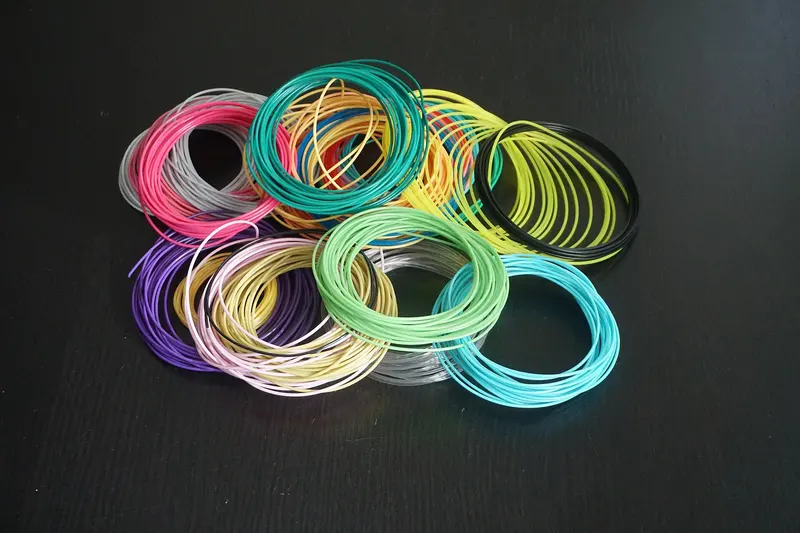
-
PLA
Easier to printFDM printers — open or enclosed.
The easiest filament to start with. Prusa describes it as beginner-friendly; it softens above about 60 °C, so it isn’t for hot cars or dishwashers. University safety guides (Edinburgh, Reading) prefer PLA to reduce emissions.
- Prusa doesn’t recommend printed items for direct food contact — layer lines can harbour bacteria.
Sources: Prusa Knowledge Base — PLA · Bambu Lab Wiki — Filament guide (printer, nozzle, AMS, build plate compatibility) · University of Edinburgh Health and Safety — 3D Printers
-
PETG
Easier to printFDM printers — open or enclosed (enclosure helps).
Tougher than PLA with good layer adhesion and little warping, but prone to stringing. Bambu Lab recommends an enclosed printer for the best layer strength.
- Dry it if prints string or look rough.
Sources: Prusa Knowledge Base — PETG · Bambu Lab Wiki — Filament guide (printer, nozzle, AMS, build plate compatibility) · Bambu Lab Wiki — Filament drying
-
TPU (flexible)
Easier to printFDM printers; not standard multi-colour feeders.
Rubbery, flexible prints for phone cases, gaskets and grips. Prusa calls flexible filaments hygroscopic and tricky; Bambu Lab lists generic TPU as not compatible with its AMS.
Sources: Prusa Knowledge Base — Flexible materials · Bambu Lab Wiki — Filament guide (printer, nozzle, AMS, build plate compatibility)
-
ABS
Needs extra careEnclosed FDM printers.
Strong and heat-resistant, but it warps and gives off styrene fumes. Prusa says it needs an enclosure and a well-ventilated room; Bambu Lab doesn’t recommend it on open-frame printers.
Sources: Prusa Knowledge Base — ABS · Bambu Lab Wiki — Filament guide (printer, nozzle, AMS, build plate compatibility) · University of Reading — Safety Note 74: Use of Polymer Filament Desktop 3D Printers (PDF)
-
ASA
Needs extra careEnclosed FDM printers.
Like ABS but UV-resistant, so it suits outdoor parts. Prusa says it releases potentially dangerous fumes; Bambu Lab recommends an enclosed printer.
Sources: Prusa Knowledge Base — ASA · Bambu Lab Wiki — Filament guide (printer, nozzle, AMS, build plate compatibility)
-
Nylon (PA)
Needs extra careEnclosed FDM printers.
Very tough engineering filament. Prusa says it can absorb up to 10% of its weight in water, so it must be stored airtight and dried before printing, and it needs good ventilation or an enclosure.
Sources: Prusa Knowledge Base — Polyamide (Nylon) · Bambu Lab Wiki — Filament guide (printer, nozzle, AMS, build plate compatibility)
-
Carbon- or glass-fibre filled filaments
Needs extra careFDM printers with a hardened steel nozzle.
Stiff, matt-finish parts — but abrasive. Bambu Lab and Prusa both say to use a hardened steel nozzle; brass and stainless nozzles wear quickly.
Carbon- or glass-fibre filled filaments on Amazon.co.uk
Sources: Bambu Lab Wiki — Filament guide (printer, nozzle, AMS, build plate compatibility) · Prusa Knowledge Base — Composite materials (filled with carbon, kevlar or glass)
-
Polycarbonate (PC)
Needs extra careEnclosed FDM printers.
Strong and heat-resistant; Bambu Lab recommends an enclosed printer and lists high nozzle temperatures.
Sources: Bambu Lab Wiki — Filament guide (printer, nozzle, AMS, build plate compatibility)
// For resin printers
Resins
-
Standard photopolymer resin
Needs extra careResin (MSLA) printers matching the resin’s wavelength.
Gives the finest detail, but needs careful handling. Formlabs and Prusa advise nitrile gloves, safety glasses and ventilation; resin can cause skin irritation or allergic reactions. Never pour liquid resin or resin-laden alcohol down the drain — Formlabs describes curing small leftovers in sunlight before binning.
- Check the resin’s wavelength (commonly 405nm) matches your printer.
Standard photopolymer resin on Amazon.co.uk
Sources: Formlabs — Safety with Formlabs SLA products · Formlabs — Disposing of resin · Prusa Knowledge Base — Resins
-
Water-washable resin
Needs extra careResin (MSLA) printers.
Washes in water instead of alcohol, but it is still a liquid resin: wear gloves and don’t pour the wash water into the sewer — Anycubic suggests evaporating it, and Formlabs’ cure-before-binning approach applies to residues.
Water-washable resin on Amazon.co.uk
Sources: Anycubic — User Guide for Anycubic Water-Wash Resin+ · Formlabs — Disposing of resin
-
Tough / ABS-like resin
Needs extra careResin (MSLA) printers.
Prusa describes “hard and resistant” resins with properties similar to ABS or PP, for parts that need to flex rather than snap. Handling and disposal are the same as any liquid resin.
Tough / ABS-like resin on Amazon.co.uk
Sources: Prusa Knowledge Base — Resins · Formlabs — Disposing of resin
Amazon links are affiliate links. As an Amazon Associate I earn from qualifying purchases. We never show Amazon prices or ratings — check them on Amazon.