Why extraction isn’t optional
Lasering creates smoke, gases and fine particles. Glowforge says these can include carbon monoxide, that its machines must only run when exhausted outdoors or through its filter, and that owners should fit and test carbon monoxide detectors (Glowforge).
Option 1: vent outside
Most enclosed lasers have a built-in exhaust fan and a hose to run to a window.
- Keep the duct short, straight and sealed — every bend and gap reduces flow.
- Use a window vent panel or insert so the window can stay mostly closed.
- Think about where the fumes go: away from doors, air intakes and neighbours’ windows.
- Some setups add an inline booster fan for longer runs; check your machine maker’s guidance first.
Option 2: a filter unit
Where you can’t vent outside, a filter unit pulls the exhaust through filters and returns cleaner air to the room. Laser filters typically combine a particle pre-filter with activated carbon for gases and odours. Filters fill up, so budget for replacements and follow the maker’s change schedule.
How HSE thinks about extraction
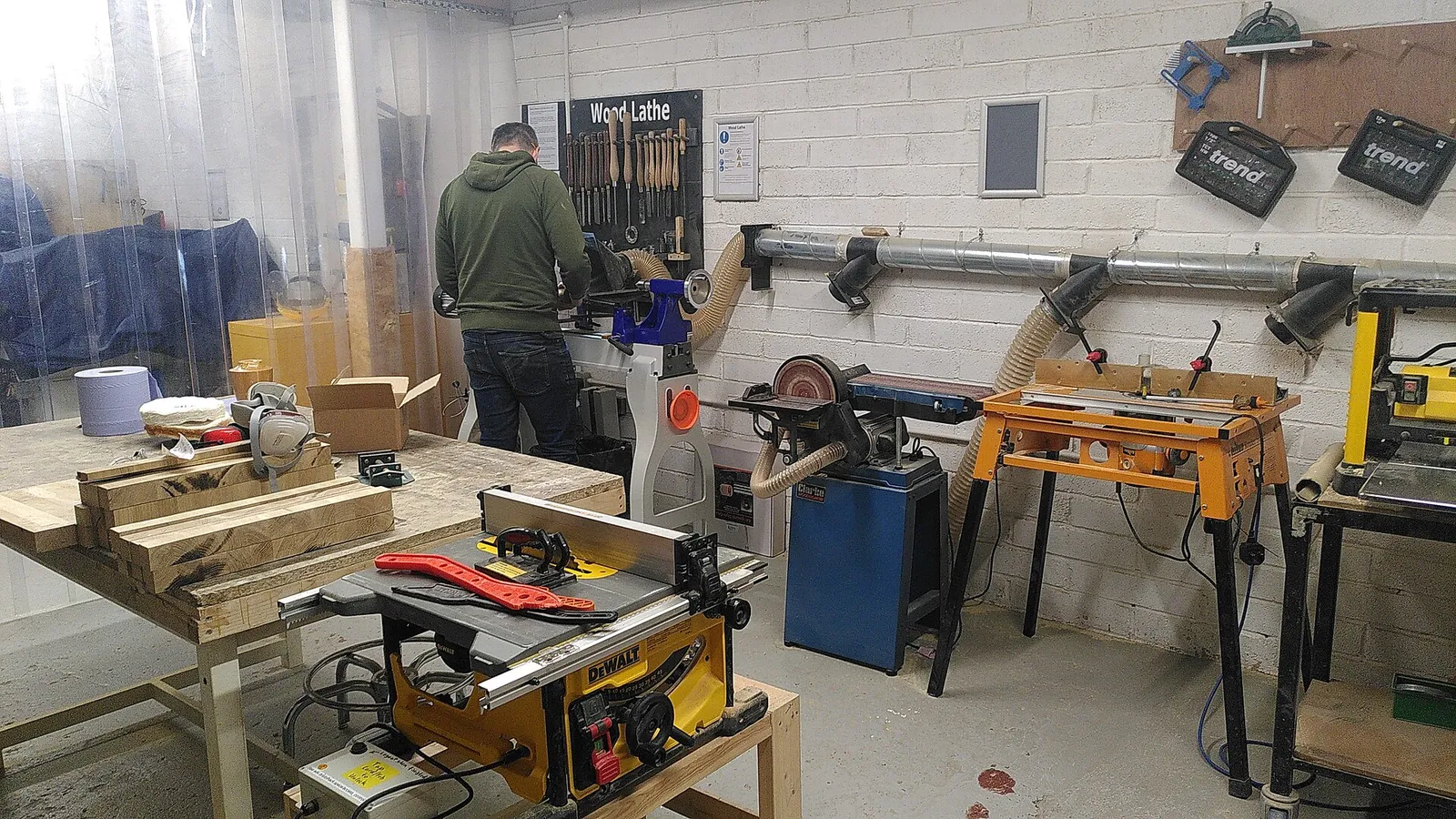
HSE describes local exhaust ventilation (LEV) as a hood, ducting, an air cleaner, a fan and a discharge, designed to stop dust and fumes being breathed in (HSE INDG408). It also notes that much LEV fails because it is the wrong type or poorly installed or maintained, and recommends airflow indicators and regular checks (HSE). Those principles apply just as well to a garage workshop.
Materials make a difference
The cleanest extraction can’t make a dangerous material safe. Trotec lists PVC, PTFE, chromium-tanned leather and anything containing halogens as unsuitable (Trotec). MDF produces more smoke and residue than plywood; HSE notes it is usually bonded with urea-formaldehyde resin (HSE). See our materials guide.
Checklist
- Exhaust running before the job starts, and until the fans stop afterwards
- Duct connections tight; no smoke escaping with the lid closed
- Filters within their service life
- Carbon monoxide alarm fitted and tested