Wavelength is everything
A laser only works on a material that absorbs its light. The three types of desktop laser emit very different wavelengths:
| Type | Typical wavelength | Good at | Can’t do |
|---|---|---|---|
| Blue diode | about 450–455nm (visible blue) | Engraving wood, leather, slate, anodised aluminium; cutting thin wood, card and dark opaque acrylic | Cut clear, white or blue acrylic; engrave clear glass directly |
| CO2 | about 10,600nm (far infrared) | Cutting and engraving wood, acrylic (including clear), leather, card, rubber; engraving glass and stone | Mark bare metal without a coating |
| Fibre / infrared | 1064nm (near infrared) | Marking and engraving bare metal | Desktop units are built for marking over a small area, not for cutting sheet |
Diode lasers
Many open-frame engravers, and enclosed craft machines such as the Glowforge Aura and Spark, use blue diode lasers. They are compact and need no gas-filled tube.
The big limitation is transparent and blue materials. xTool says a blue diode laser can’t cut clear, white or blue acrylic, and recommends dark, non-transparent acrylic instead (xTool); Glowforge lists glass, clear, white and blue acrylic as incompatible with its diode Craft models (Glowforge). xTool also says diode lasers can’t directly engrave transparent glass — you cover it with coloured paper first (xTool D1 guide).
CO2 lasers
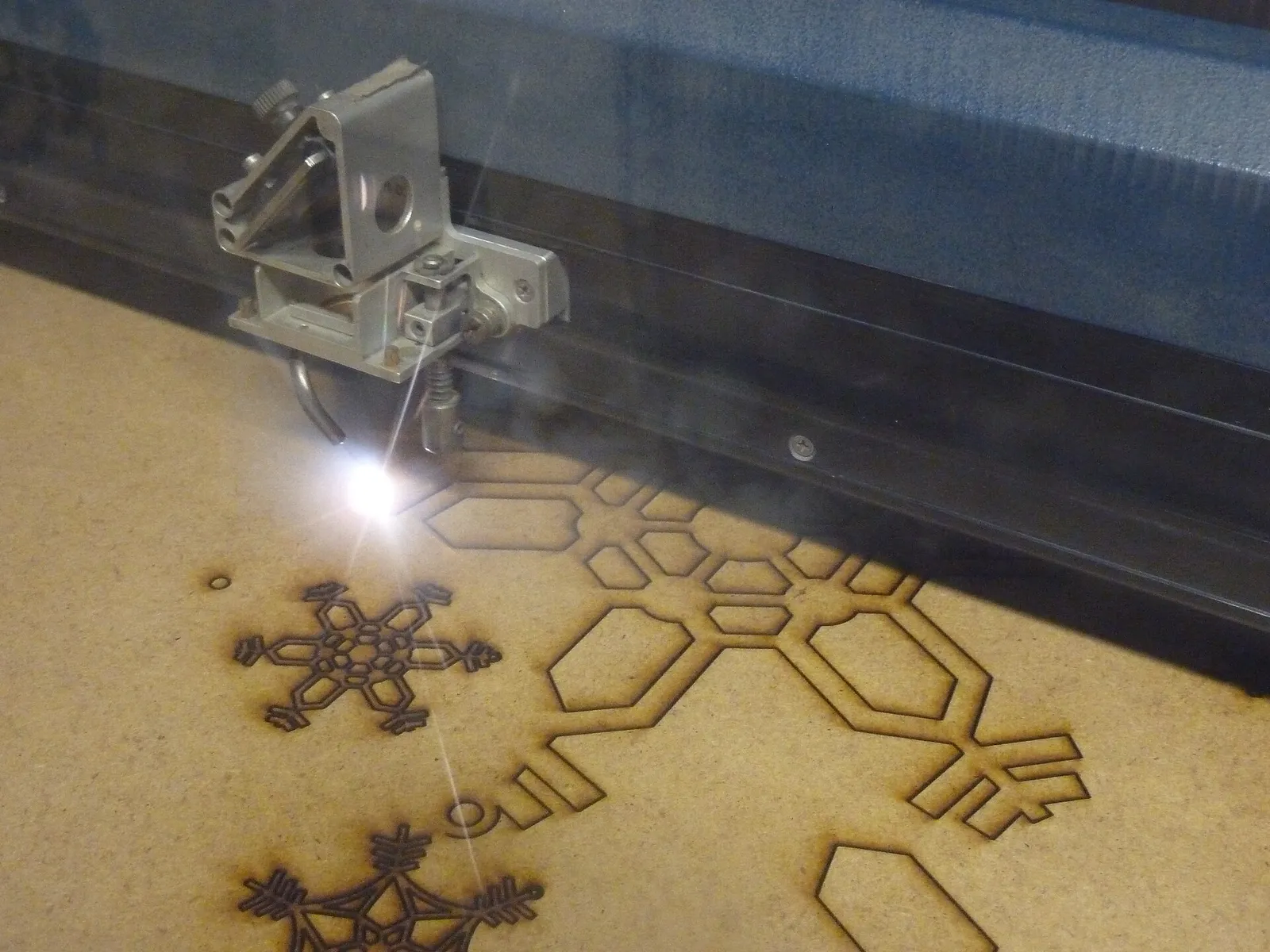
CO2 lasers are the classic laser cutter; Glowforge’s Plus HD and Pro HD use them. Acrylic absorbs CO2 light, which is why CO2 machines cut it with polished edges (Trotec). Epilog’s compatibility table lists wood, acrylic, cork, leather, fabric, paper and rubber for cutting and engraving, glass, marble and tile for engraving, and says bare metals need a marking coating (Epilog).
The trade-off is size: compare the dimensions and weights on our machine pages before you plan where one will go.
Fibre and infrared lasers
Fibre lasers at 1064nm mark bare metal directly, which CO2 machines can only do with a marking coating (Epilog). Desktop fibre markers usually steer the beam with fast mirrors (galvo) over a small area. Some machines combine a blue diode with an infrared source so one machine can do both wood and metal.
Safety differs too
Each wavelength needs its own eye protection. A pair of glasses rated for a 455nm diode gives no protection against a 1064nm or 10,600nm beam, which is why xTool publishes goggle ratings per wavelength (xTool). Read our safety guide before choosing.
Which should you choose?
- Mostly wood, card and leather, small space, tight budget: a diode laser — ideally enclosed if others share the room.
- Clear acrylic, thicker sheet, faster cutting: a CO2 laser.
- Metal tags, tools, jewellery: a fibre laser, or a dual diode + infrared machine.
Compare real models in our machine database, or try the laser or 3D printer chooser.